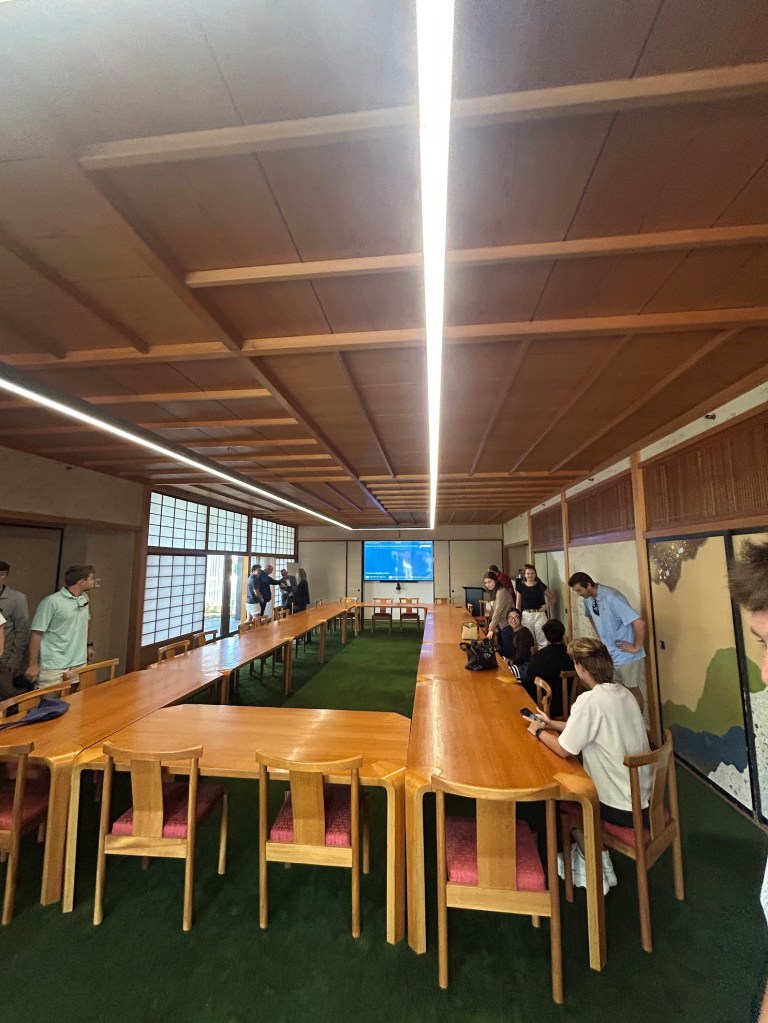
Today, we visited the University of Melbourne. It was a super cool campus with an impressive mix of historic buildings and modern facilities. It was great to meet some of the faculty and learn about the Smart Villages program.
They explained how the program is centered on how villages and smaller communities can play a role in counteracting CO₂ production from major cities. A big part of the discussion was about using sustainable design, renewable energy, and smarter construction practices in rural and developing areas to reduce overall carbon impact. Instead of only trying to fix emissions problems inside dense cities, the idea is to empower villages to become cleaner, more efficient, and even carbon-negative, helping balance out the environmental footprint of urban centers.
What stood out to me was how practical and global the approach is. The faculty shared examples of projects focused on energy access, sustainable infrastructure, and low-impact development, showing how construction and engineering can directly contribute to environmental solutions. It tied in really well with what we’ve been learning about sustainability and the future of the built environment.
Overall, the visit gave me a new perspective on how construction, planning, and engineering can extend far beyond cities and large developments. It was a really interesting experience and definitely made me think more about the role the industry can play in addressing climate challenges.
 BSCI Down Under 2026
Leave a comment